

Ask anyone who has built a house in India what made it work, and you will hear the same answer: I was there. Five days a week, for two years.
That is the sentence that frightens every owner who lives somewhere else — in Dubai, in Singapore, or simply in Bangalore while the plot is in Hyderabad. If constant presence is the answer, what happens to the person who cannot be present?
It is a fair fear and a wrong conclusion. Presence is not what protects a build. Presence is what people use because nothing better was set up. What actually protects a build is a small number of decisions taken before work starts, and a record that exists whether or not anyone stood on site that morning.
How do you check construction quality when you are not on site?
By deciding, before work starts, what must be photographed and approved before it is covered — and by refusing to release the payment for that stage until it is. Quality on a remote build is not a matter of watching more. It is a matter of making a small number of moments unskippable.
Everything that goes wrong expensively in an Indian house has one thing in common: it is invisible by the time you could have seen it. Reinforcement is inspected and then buried in concrete. Waterproofing in a sunken slab is applied and then tiled over. Conduits are chased into walls and then plastered. Plumbing lines are tested, or not tested, and then closed. A visitor walking the site in month nine sees a building. He cannot see any of the decisions that will decide whether it leaks in year three. So the useful question is never “how often can I visit”. It is “which fifteen moments cannot be undone, and what proof do I get at each one”.
The moments that cannot be undone
This is our working list. It is short on purpose — a checklist of forty items gets ignored, a checklist of a dozen gets used.
| Stage | What must exist before it is covered |
|---|---|
| Before design | A soil test on your plot, with the report in your hands |
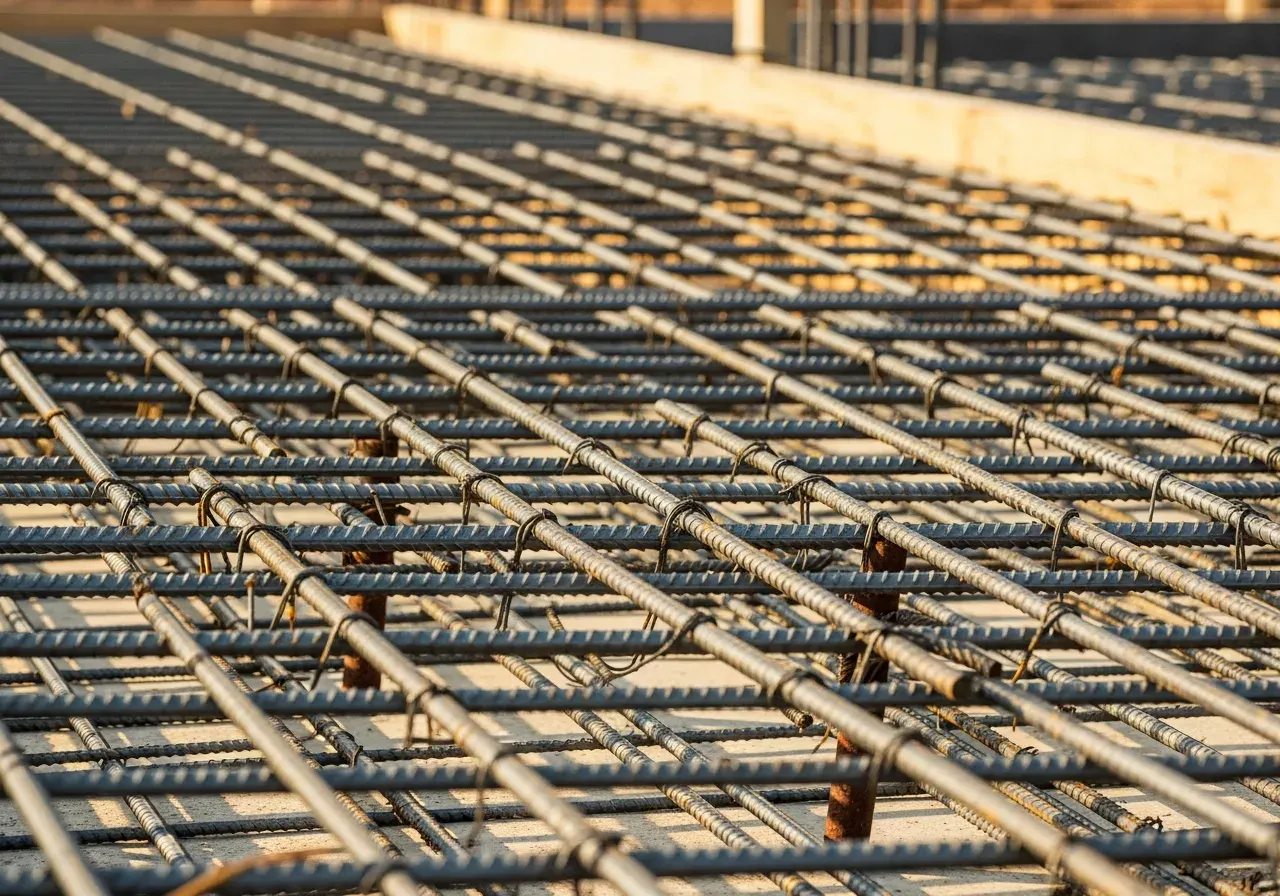
| Before any pour | Photographs of the reinforcement with a measure in frame, and the bar bending schedule it was built to |
| Concrete | Delivery slips for ready-mix, or cube test results for site mix, with dates |
| After the pour | Dated curing photographs across the full curing period, not one on day two |
| Bathrooms, terraces, sunken slabs | Waterproofing photographs, and a ponding test held long enough to mean something |
| Before plaster | Electrical conduit and plumbing line routes photographed against the wall, wall by wall |
| Before closing plumbing | A pressure test, witnessed and recorded |
| Materials, throughout | Bills in your name for steel, cement and waterproofing — brand and grade legible |
Those conduit photographs earn their keep long after handover. Five years from now somebody will want to hang a mirror, drill into a wall and hit a water line. A remote owner with a photo folder knows where not to drill. It is a small thing, and it is the kind of small thing that separates a documented build from a finished one.
Why the relative who was going to check stops checking
Almost every owner who builds from elsewhere starts with the same arrangement: a brother, a cousin, a retired father who will “keep an eye on things”. And in most cases, within four or five months, the visits get thinner. Not because anybody was careless. Because it is an unpaid job, with no defined task, no deadline, and no authority.
Think about what is actually being asked. Drive across the city on a working day. Stand in dust. Form a view on whether a slab is ready — a judgement that takes training. Then, if something is wrong, have an argument with a contractor on behalf of someone who is not there. That is a professional’s job handed to a relative as a favour, and the failure is structural, not personal.
So separate the two things. A family member is excellent at the jobs that need trust: holding keys, signing a paper, being physically present when someone must be. Judgement about the work belongs to somebody whose contract makes it their obligation — your architect, an independent site engineer, or a builder who is accountable for the documentation as a deliverable rather than a courtesy. The difference between those two is the difference between “he said it looks fine” and “here is the bar bending schedule, here is the photograph, here is the date”.
What has to be in the contract when you cannot walk the site
A remote build does not need a longer contract. It needs four clauses an on-site owner can get away without.
- Payment tied to defined completed work, not to dates. “On completion of ground floor slab, cured and photographed” is a stage. “End of month four” is a calendar, and a calendar pays for time rather than for work.
- Documentation named as a deliverable. If the photographs and test results are not written into the contract, they are a favour, and favours stop when a project gets difficult — which is exactly when you need them.
- A material specification with brands and grades, annexed. Not “good quality cement”. The grade, the brand list you have agreed, and the right to see the bills.
- A named person, and what happens if they change. The single most common quiet failure is the engineer who knew your project moving on and nobody telling you.
Two more things worth writing in while you have the pen. A defect liability period, with the retention amount stated — money held back is the only thing that reliably brings a contractor back for snags. And an exit: what happens, step by step, if you decide to stop. Owners who have been trapped mid-build describe the same feeling, that there was no way out without losing everything already paid. The exit route costs nothing to write at the start and is impossible to negotiate later. The full clause-by-clause version is in what a construction contract should include.
How much advance is too much?
If money is running ahead of work, you have already lost your leverage. The safest structure keeps the value of completed work slightly ahead of the money paid at every point in the build — so that at any moment, stopping costs the contractor more than it costs you.
There is a legal anchor worth knowing, though it does not cover your case directly. Under the Real Estate (Regulation and Development) Act 2016, a promoter selling a flat cannot take more than 10% of the cost as advance before a written agreement for sale is signed and registered. That rule exists because the legislature recognised exactly this danger. It applies to a promoter selling you a unit, not to a contractor building on land you already own — on your own plot, the only thing protecting you is your contract. Which is the point: the law thought 10% before paper was the limit of reasonable. Treat anything far beyond that, on your own build, as something to ask hard questions about.
The pattern that repeats in every cheated-owner story is the same shape. A large advance. A burst of visible work. A request for the next instalment before the last one was finished. Then silence. By the time the owner counts properly, 80 or 90 per cent has gone and half a house exists. We set it out in detail in how a payment schedule should actually be written.
If you live in Mumbai, Bangalore or Delhi, not Dubai
Everything above applies to you unchanged. There is no legal layer — no power of attorney question, no foreign exchange rules, no residential status to prove. What you have instead is a trap the overseas owner does not have: you can come.
Because a flight is three hours and not fourteen, the arrangement is usually left informal. No documentation clause, no stage gates, a rough plan to “go every few weekends”. Then work gets busy, two months pass, and you arrive to find plaster over something you would have questioned. The NRI owner sets up a system because he knows he has no alternative. The domestic out-of-state owner often does not, because he keeps believing he will get there.
Our advice is to build the same system, and then treat your visits as a bonus rather than the mechanism. Go at the moments where being physically present actually changes something — before the first pour, at the start of finishing, and at handover — rather than spreading the same number of trips thinly across the year. Three well-timed visits beat nine random ones, and they cost less.
Can you watch the site on camera?
A camera is worth having and it is not a substitute for anything. It tells you whether work happened today. It cannot tell you what grade of steel went in, whether the slab was cured for its full period, or whether the waterproofing under those tiles was done at all.
Used well, a site camera does two useful things. It removes the small daily anxiety — the wondering, at 11pm in another time zone, whether anyone turned up this week. And it makes the conversation concrete: instead of “how is it going”, you can ask about the specific thing you saw. Used badly, it creates a false sense of supervision, which is more dangerous than no camera at all, because it stops you asking for the documents. Keep both. The camera for the rhythm, the record for the substance.
What happens if the contractor stops showing up
It is the most common story in the Indian home-building complaint threads, and the version the remote owner lives is worse, because the standard advice — go to the site, stand there, escalate in person — is the one thing you cannot do.
Three things make it survivable, and all three are decided at the start. Money not far ahead of work, so walking away costs him. A written record of what was agreed and what was actually completed, so the measurement of work done is not a matter of two people’s memory. And a named exit in the contract, so replacing him is a procedure rather than a fight. Without those, what follows is months of calls, then a lawyer, then a measurement dispute conducted from another country. With them, it is a bad few weeks.
Where we are not the right fit
If you want the lowest number on the page, we will not be it. Documentation, testing and stage-wise verification cost something, and they appear in our bill of quantities as line items rather than being quietly dropped to win a comparison.
We are also not the right choice if you want to run the project yourself and use us for labour only. That model can work — it works badly at a distance, because it puts the coordination on the person who is furthest from the site. If that is what you want, it is worth reading turnkey versus labour contract before you decide, and deciding with your eyes open.
Questions we get asked
How often does someone actually need to be on site?
Somebody accountable, every working day. You, three or four times across the build, at moments chosen for what they decide rather than when you happen to be free. The daily presence is a job; your visits are judgement.
How do I know the steel I paid for actually went in?
The bar bending schedule, the material bills showing grade and quantity, and photographs of the reinforcement in place with a measure in frame — all of it before the pour. There is no way to establish it afterwards, which is why the sequence matters more than the checking.
Can I change builders halfway if it is going badly?
You can, and it is much easier if your contract says how. What makes it painful is money paid ahead of work and no agreed measurement of what was completed. Both are decided when you sign, not when you want to leave.
Should I appoint my own engineer as well as the builder?
If your builder does not give you documentation as a contractual deliverable, yes, and it is money well spent. If documentation is contractual and you can see it stage by stage, a second engineer is usually duplication. Judge it by what you are being sent, not by anyone’s assurances.
What if my plot is in a different state from where I live in India?
The building rules are local, so the approval route changes — Telangana runs through BuildNow, Goa needs a technical clearance and then a panchayat or municipal licence. The supervision problem is identical. Read building permission in Hyderabad or building permission in Goa.
Is a turnkey contract safer for a remote owner?
It concentrates accountability in one place, which matters a great deal when you cannot arbitrate between parties yourself. It is safer only if the contract is specific — a vague turnkey scope is just a vague contract with a confident name on it.
Where to go next
If you are outside India, two more pieces sit alongside this one: the power of attorney, and how the money should move. If you are in India but in another city, those two do not apply and everything on this page does.
City by city: building in Hyderabad as an NRI · building in Goa from abroad · checking construction quality yourself.
Or send us your plot details and tell us where you live. We will tell you what the stage record would look like on your project before you commit to anything. Talk to our team, see homes we have built, or read how we start a project.