


Most owners who lose control of their money did not skip the payment schedule. They had one. They agreed the timelines. And they still ended up paying ahead of the work.
That is because a schedule built on dates and percentages protects nobody. The month arrives whether or not the work did.
Having a house construction payment schedule is not the protection. What the schedule releases money against is the protection. If it says “second payment in month three”, month three arrives whether or not the work did. If it says “second payment when the plinth is complete, checked and photographed”, the money and the work stay tied together.
The one principle the whole page rests on
Money is released against a completed and documented stage. Never against a calendar date.
A date is something anyone can reach by waiting. A completed stage is something only real work can produce. Here is one build, written both ways.
| Payment | Weak version, date-based (illustration only) | Strong version, evidence-based |
|---|---|---|
| 1 | On signing | On signing, against the signed contract, the approved drawings and the site handover note |
| 2 | One month after start | When excavation and footings are complete, steel photographed before the pour, pour date recorded |
| 3 | Two months after start | When the plinth is complete and the plinth level is verified against the drawing |
| 4 | Three months after start | When the ground floor slab is cast and the curing period is recorded as complete |
| 5 | Four months after start | When brickwork on that floor is complete and openings match the drawing |
| 6 | Five months after start | When electrical and plumbing rough-in is complete, photographed before plastering covers it |
| 7 | On completion | On handover, against the completion documents, the snag list closed, and retention still held |
Column two can be satisfied by waiting. Column three needs something to exist, and a record that it exists. The request becomes one question: is the stage done, and can I see the proof?
What is the common payment schedule for a new construction home?
A new home is paid in stages, not one sum. A small mobilisation payment starts the work, then money is released as each stage finishes — foundation, plinth, structure, roof slab, brickwork, plaster, services, flooring, finishing — and a final part is held back until after handover. The percentage against each stage is negotiated, not fixed.
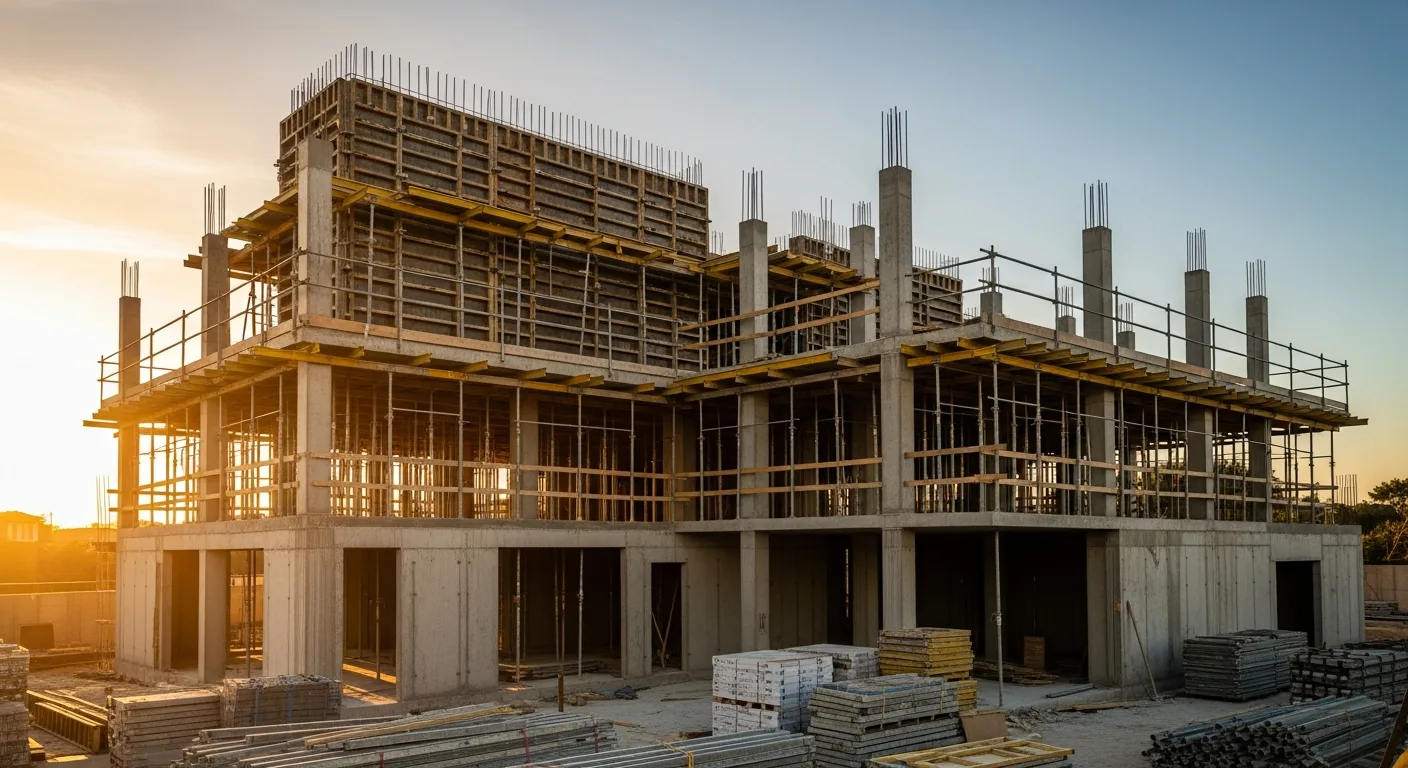
There is no legally standard split in India for a private home on your own plot. What does not change is the shape: many small releases tied to checkable progress, with something still unpaid at handover. Your job is not to find the “correct” percentages, but to make sure each sits next to a stage you can walk up to and verify. Our step-by-step build process sets out the order the work happens in.
The stages — and why the percentages must come from your contract
The percentage column below is deliberately empty. We will not publish a split and call it standard, because there isn’t one. Fill it in from your signed contract. A builder who will not put a number in every row has told you something.
| Stage | Your agreed % (from your contract) | The evidence that should release it |
|---|---|---|
| Mobilisation | ___ | Site cleared, fencing and site office up, labour on site |
| Foundation | ___ | Excavation and footings complete, steel photographed before the pour |
| Plinth | ___ | Plinth complete, level checked against drawing |
| Structure, per floor | ___ | Columns and beams for that floor cast, dated |
| Roof slab | ___ | Slab cast, curing period completed and recorded |
| Brickwork | ___ | Walls up, openings match the drawing |
| Plaster | ___ | Internal and external plaster complete, surfaces checked |
| Electrical and plumbing rough-in | ___ | Conduits and lines complete and photographed before plastering hides them |
| Flooring | ___ | Laid, levels and joints checked |
| Finishing | ___ | Paint, fittings, joinery complete against the specification |
| Handover | ___ | Snag list closed, documents handed over, retention still held |
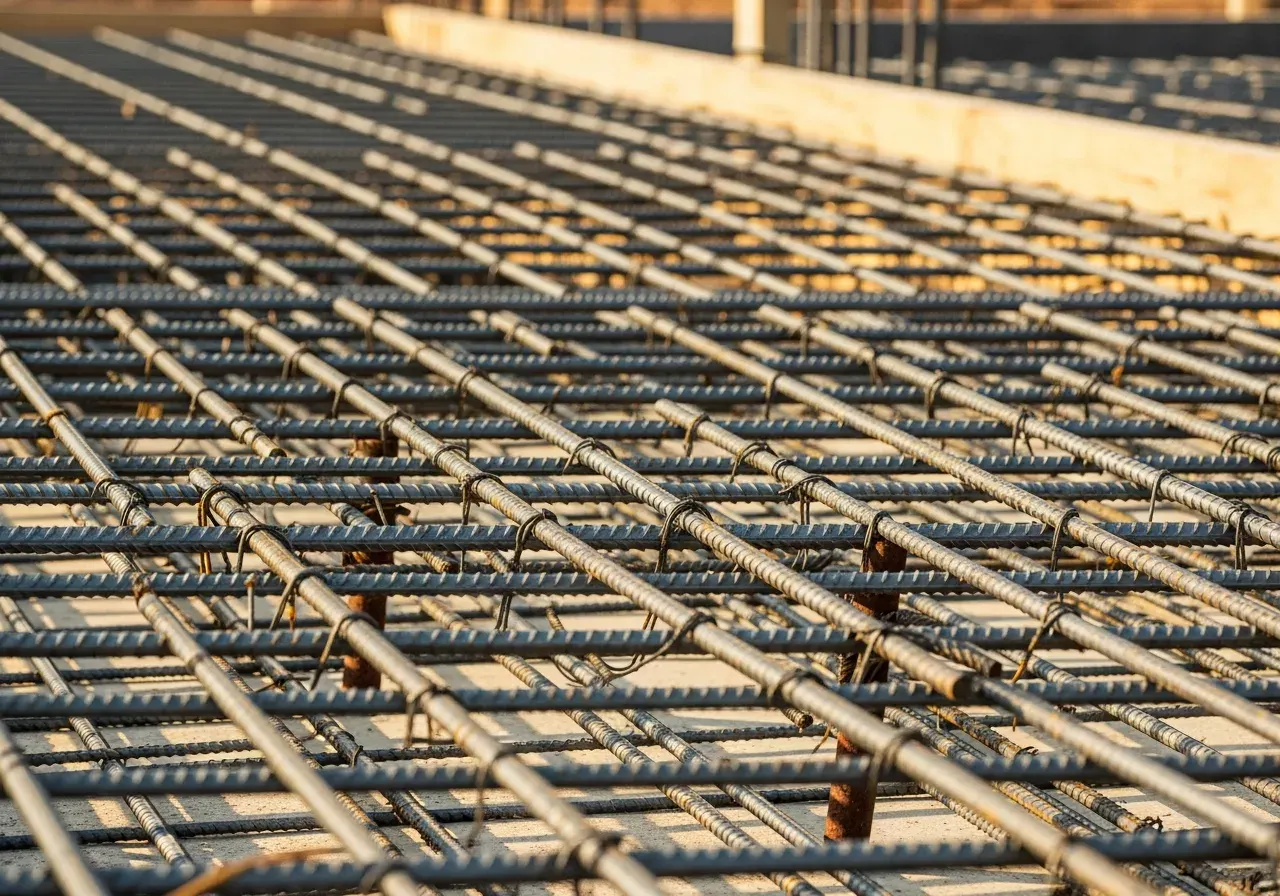
Rough-in matters most. It is the last moment anybody can see the pipes and conduits that sit inside your walls for forty years. Once plaster goes on, an inspection becomes a repair. Make those photographs a contract condition.
How much advance should I pay a contractor?
An advance should cover what the builder has to spend before any money comes back to him: mobilising the site, setting up, and the first material order. It is a working float, not a deposit. The larger it is, the more of your money sits ahead of your work.
Every rupee paid ahead of work is one you cannot withhold if things go wrong. So the question is not “what percentage is normal”, it is “what does he have to spend before he can invoice the first real stage?” Ask for it in writing, item by item. Then settle how the advance is recovered, and whether material bought with it becomes yours on delivery.
What is the labour cost for a 1000 sq ft house?
A labour rate is not the number that protects you. It is a price per unit of a thing not yet fully defined — change the design, the span, the finishes or the site access and the same rate produces a very different bill. What you pay is decided by the contract sum and what sits outside it.
A low rate quoted early is an easy promise, recovered later through extras and “that was not in the scope”. What protects you is the contract sum, the exclusions, how a variation is priced and approved before it is executed, and what happens if work stops. On a bespoke build the risk is almost never the rate — it is scope you assumed was included. Our guide on choosing a construction company in Hyderabad covers what to ask for.
The percentages people actually use — and what they are worth
You will see a stage-wise percentage table on almost every builder’s quotation, and you have probably been handed one already. It is worth understanding exactly what that table is, because most owners assume it carries more authority than it does.
Here is the part almost nobody tells you. If you were buying a flat from a developer, the law would give you a schedule. Under Section 13(1) of the Real Estate (Regulation and Development) Act, 2016, a promoter “shall not accept a sum more than ten per cent of the cost of the apartment, plot, or building… as an advance payment or an application fee… without first entering into a written agreement for sale… and register the said agreement”. Section 13(2) then requires that agreement to specify “the dates and the manner by which payments… are to be made by the allottees”.
On your own plot, with your own contractor, none of that applies to you. RERA governs a promoter selling you a unit. It does not govern the person you hired to build on land you already own. So there is no statutory cap on your advance, no statutory schedule, and no authority you can appeal to afterwards. The only schedule that protects you is the one you wrote into your contract.
That is why the percentages below are offered as what they are: ranges commonly used in the Indian residential market. They are not a rule, not a standard, and not our quotation. They are useful for one thing only — checking whether the split in front of you is unusual.
| Stage | What it covers | Commonly seen range |
|---|---|---|
| 1. Planning & approvals | Drawings, soil test, permissions, mobilisation | 5–10% |
| 2. Foundation | Excavation, footings, plinth | 15–20% |
| 3. Structure (RCC & masonry) | Columns, beams, walls, floor by floor | 20–25% |
| 4. Roofing / final slab | Slab cast and cured | 10–15% |
| 5. Plumbing, electrical & services | Concealed rough-in, before plaster | 10–15% |
| 6. Finishing | Plaster, flooring, paint, fittings | 10–15% |
| 7. Handover | Snagging closed, documents issued | 5–10% |
Now the part that matters more than the numbers. A percentage decides how much. It does not decide when. Two contracts can carry the identical table above and behave completely differently, because one releases stage 3 on a date and the other releases it when the columns for that floor are cast, dated and photographed.
So use the table twice. First, to sanity-check the shape of what you have been offered — a front-loaded split where planning and foundation together exceed roughly a third of the contract value deserves a conversation before signature, not after. Second, and more importantly, to attach evidence to every row. The table above sets the size of each release. The evidence table further down this page sets the trigger. You need both, and most owners are only ever given one.
Statutory text: Section 13, RERA 2016. Applies to promoters selling units — not to a construction contract on land you already own. The ranges shown are market practice, not law.
Early-warning signals: when a payment request is not what it seems
Payment trouble rarely starts with a refusal. It starts with a request that feels slightly off and gets paid anyway, because refusing feels rude. Each of these five is survivable alone. Two in one month needs a hard conversation.
| Signal | What it usually means | What to do the same week |
|---|---|---|
| A request arrives ahead of the stage it belongs to | Cash is short somewhere, possibly on another site | Do not pay early. Ask, in writing, which stage it belongs to and what is outstanding on it |
| The advance grows after the contract is signed | The original number was never enough, or the money has already moved | Stop. Reopen the contract properly rather than amending it by WhatsApp |
| A stage is marked complete with no documentation | Nobody wants you to look closely at that stage | Withhold the release, not the goodwill. Ask for the photographs and the check the contract requires |
| The request is urgent “because material prices are about to rise” | Urgency is being used to bypass your own verification | Ask for the supplier quote in writing. A real price movement has a document behind it |
| Cumulative payments are running ahead of visible work | The most serious one. Your position is eroding quietly | Add up everything paid to date, walk the site, and compare. Do this monthly, not at the end |
That last row deserves a habit. Keep one page — a phone note is fine — with every payment, its date and the stage it released. Once a month, stand on site with it open, looking for drift: the gap between what you have paid for and what exists. It is invisible payment by payment, obvious in a running total.
Retention: the part most owners give away without noticing
Retention is a portion of the contract sum that stays unpaid for an agreed period after handover, released only when defects that appear in that period have been put right. The percentage and the period are negotiated and must be written into the contract.

A house does not reveal itself on handover day. It reveals itself in the first monsoon. A terrace or bathroom waterproofed at the wrong stage looks flawless at handover and shows itself months later, and in Goa the coastal air finds weak sealing on its own schedule. A snag list catches what your eyes catch that day; retention catches what time catches. Pay everything at handover and every later defect becomes a favour, not a term of an agreement. Settle in writing how much is held, for how long, and what releases it, alongside whatever written warranty a builder offers.
If a bank loan is involved, use its discipline
A home construction loan is paid out in tranches, not as a single sum, and the bank releases each tranche after its own valuer or engineer inspects the site and confirms the stage is complete. Your builder’s schedule and the bank’s must be aligned before you sign either.
Most owners treat the bank as an obstacle. It is closer to a free second opinion, on the same instinct as this page: no money against a date, only against an inspected stage. Get the lender’s stage list in writing at the start and make your builder’s stages match it — where they do not, you fund the gap.
What to do when a stage is genuinely disputed
Sometimes the disagreement is real. He says the stage is complete, you do not, and both may be honest.
Do not pay to keep the peace, and do not stop everything. Pay for what is complete and withhold only the disputed part, in writing, in one email rather than a WhatsApp thread. If the item is technical, an independent engineer or your architect usually settles it in one visit.
A private contract to build on your own plot is not covered by the regulations governing developers who sell apartments. The wording is all you have, so have a lawyer read your payment clauses first.
The checklist: before you release any payment
Screenshot this. Run it every time, including routine payments — that is where drift starts.

- The stage this payment belongs to is named in the contract
- That stage is genuinely complete, not “nearly”
- I have the documentation the contract requires — photographs, dated records, checks
- Anything that will be covered up has been photographed before it is covered
- The amount matches the contract, not a message
- Any variation in this stage was approved in writing before it was executed
- Total paid to date is in line with what is standing on site
- Retention is still being held, and I know the release conditions
- If a bank is involved, this stage matches the bank’s stage list
- Nothing about this request is urgent for a reason I cannot verify in writing
- I have a record of this payment, its date and its stage, on one running page
If one box is unticked, you are not refusing to pay. You are asking one question first.
How we handle this at Simfy Homes
We build bespoke homes and interiors in Hyderabad and Goa, on plots our clients already own. Stages are defined in the contract before work starts, payments are tied to them, and the evidence is part of the deal, not something you chase. Kingston Park and Ridhira Zen are finished and can be visited; Golecha Ghar is on site now. See the homes we have built before you decide.
We are plainly not for everyone. If your priority is the smallest number in the room, we will not be it, and if what you want is the lowest number rather than a documented process, there are good house construction teams in Hyderabad better suited to it.
Bring us your plot or plan and we will show you how the stages and payments line up before anything is signed.
FAQs
Should I ever pay a builder in advance for material? Only against an itemised list, and only if the contract says material delivered to your site becomes yours. Otherwise it is an unsecured loan.
Can I change the payment schedule after work has started? You can, but treat it as a contract change, not a message. Put the reason, stages and amounts in a signed amendment.
What happens if the design changes mid-build? It should be priced and approved in writing before the work is done, and the schedule adjusted then. Executing first and pricing later leaves nothing to negotiate with.
Is a stage-wise schedule better than paying monthly? For an owner, yes. A monthly payment is a calendar payment, and a calendar arrives whether the work did or not.
Who should verify that a stage is complete? Ideally someone not paid by the builder — your architect, an independent engineer, or the bank’s valuer.
How long should retention be held after handover? Long enough to cover a full season, so weather-related defects can appear. Write the period and release conditions into the contract.