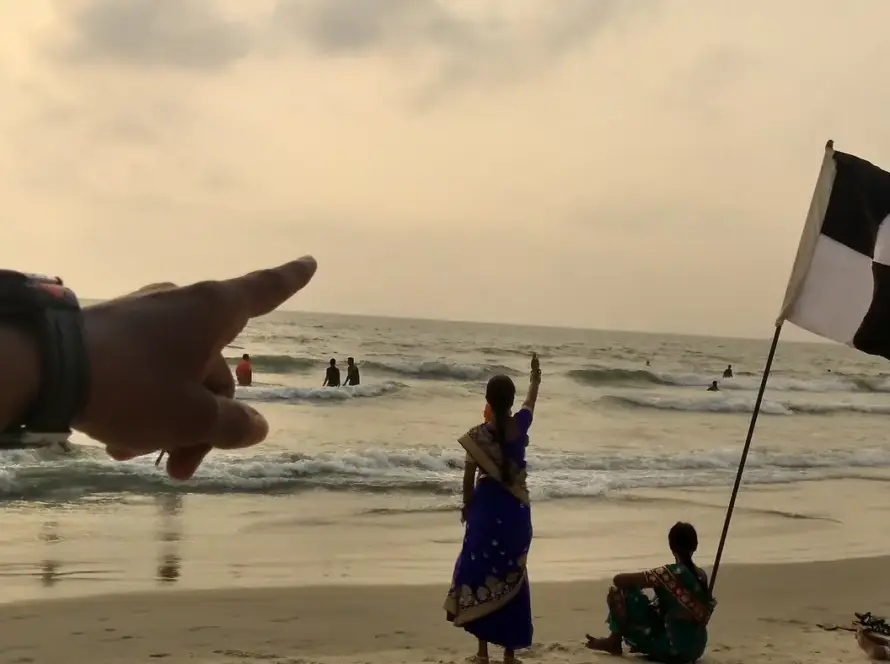


The photo always looks fine.
That is the thing nobody warns you about. You are in Dubai, or Bandra, or Whitefield. Every Sunday a photo arrives on WhatsApp — walls going up, men working, the plot looking more like a house than it did last week. You feel good about it.
Two monsoons later the wall behind the staircase is dark and soft, and someone has to tell you the waterproofing was skipped at the sunken slab. The only way to confirm it now is to break the floor.
The photo was fine. The photo is always fine. A photo shows you what a wall looks like. It does not show you what is inside it.
If you are building in Goa from somewhere else, that is the whole problem. Not honesty — timing. There are about six moments in a build where something gets sealed up and becomes permanently unverifiable.
Can you build a house in Goa without being there?
Yes. People do it every year from Mumbai, Delhi, Bengaluru, Dubai and London. What decides the outcome is not how often you fly down — it is whether the build is structured so the six sealing moments are recorded before they close, and whether your money is released against work that has happened rather than against a calendar.
Distance is not the risk. Distance without structure is the risk.
Owners who get a good house from 2,000 km away rarely do it by visiting more. They fix three things at the start: a contract that pays for finished stages rather than elapsed months, a named person on the ground whose only job is to look, and a short list of moments where work stops until something has been seen and recorded. Everything else — weekly photos, drone videos, site groups — is comfort, not control. An owner in London with those three things usually ends up with a better house than an owner in Panaji who drops by when he can and signs cheques on trust. Being present feels like control. It is not the same thing.
What makes Goa different
Park your metro experience. Goa runs on different rules.
The permission chain has two halves. Depending on your plot, you need either Development Permission from the Planning and Development Authority or Technical Clearance from the Town Planning Department — and then, separately, a Building Licence from the Village Panchayat or Municipal Council. Two authorities, in order. On top come the NOCs your plot triggers: Coastal Zone Management if you are in CRZ, a Conservation Committee opinion in a heritage area, fire and departmental clearances where relevant. (Goa Town & Country Planning Department)
A plot near a beach is not a plot with a nice view. It is a plot with an extra authority in the chain.

The year has a hole in it. Goa’s monsoon is roughly four months of heavy, continuous water, June to September. Some work cannot happen in it. Some work done just before it will fail in it.
The materials behave differently. Laterite is the local stone and it is porous by nature. Salt air eats fixings, hinges and window hardware faster than inland air. Humidity stays high for months. A specification copied from a Hyderabad villa underperforms here — quietly, in year three rather than year one.
And the land asks questions Hyderabad does not — Conversion Sanad, orchard classification, tenant and mundkar entries in Form I & XIV. If those are unresolved, the build stops and you hear about it from a distance. Settle the title before you plan the foundation.
No construction plan survives an unresolved sanad. We look at land papers before drawings for exactly that reason — see how we start a project, and what our Goa construction team checks first.
The six moments that decide the house
Worth printing out.
In every build there are a handful of points where work gets covered permanently. Before the cover, checking costs nothing. After, checking means demolition.
| # | The moment | What gets sealed | What must exist before it closes |
|---|---|---|---|
| 1 | Before the foundation | The ground | Soil test for this plot. Foundation designed to that report |
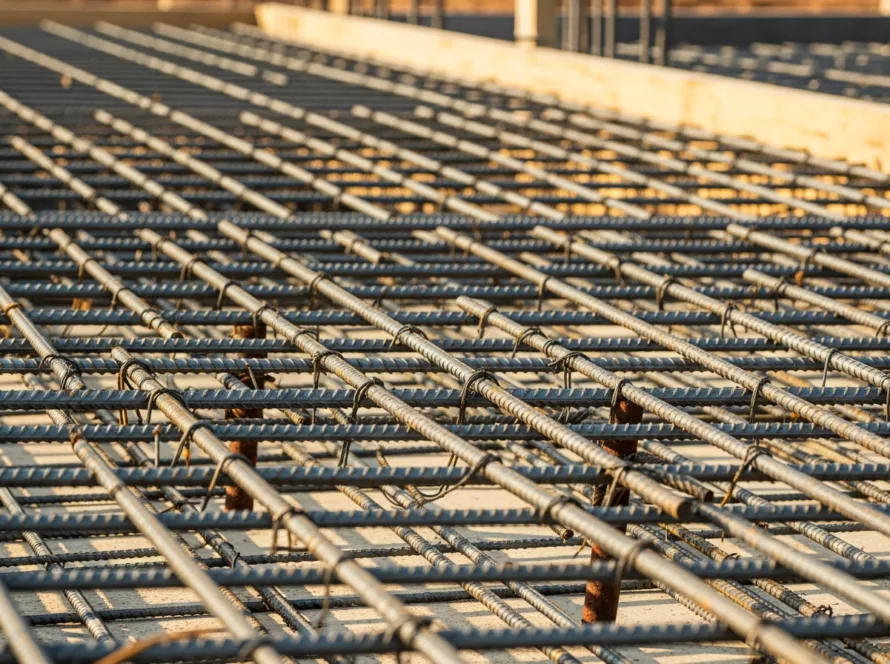
| 2 | Before any concrete pour | The steel | Dated photos of bar size, spacing, cover blocks and laps — before the pour |
| 3 | Before the floor is laid | Plumbing and conduits | Routed-line photos; pressure test on water lines |
| 4 | Before tiling wet areas | Waterproofing | Membrane photos at bathrooms, terrace and sunken slab, plus a ponding test held the full duration |
| 5 | Before plaster | Electrical conduits and chases | Wall-by-wall photos with a tape measure in frame |
| 6 | Before the last payment | Everything | Snag list closed in writing; completion documents in hand |

Only one of these appears in a normal progress photo. That is why the weekly photo reassures and does not protect.
The rule that makes it work: each one is a hold point. The next activity does not start until the evidence exists. Written into the contract at the start, this costs nothing. Asked for later, it is a favour.
And the detail that separates a record from a decoration: a date, a location and something for scale in the frame. Steel with a tape measure in the photo is a record. Steel is a picture.
What a power of attorney can and cannot do
Most people reach for a power of attorney first. It is useful, and narrower than it sounds.
A registered power of attorney lets a named person sign on your behalf — file applications, appear before authorities, receive documents. For an owner abroad, that removes a real source of delay. The exact execution, attestation and registration requirements depend on where you sign it and where the property sits, so this is a question for a lawyer on your specific case rather than something to take from any website, ours included.
What it does not do is supervise. A power of attorney is a legal authority, not a pair of eyes. It does not make the holder able to judge whether cover-block spacing is right. Confusing the two is common and expensive: people grant a wide power of attorney, feel covered, and later find nobody’s actual job was to look.
Keep them separate. Legal authority → a power of attorney, narrow, specific to this project, with a clear end. Technical oversight → someone whose only job is to inspect and report, with no financial interest in the work being passed.
Pay for work, not for weeks
The biggest protection an absent owner has is the payment schedule, and it is decided before a brick is laid.
Paid against time, money moves monthly and the contractor’s incentive is for the project to continue. Paid against completed stages, money moves when a defined stage is finished and evidenced, and the incentive is to finish it properly.
At a distance, only the second works. A stage-linked schedule gives you leverage at exactly the moments you cannot attend. When the next payment depends on the steel photographs existing, they exist. When it depends on the ponding test running its full duration, the test gets held. You are not relying on goodwill across a time zone — the structure does the asking.
Three things to insist on, whoever builds for you:
- Stages tied to the six hold points, not to “50% work done”
- A retention held past handover — released after the first monsoon, not at the door
- A written variation process — no extra work starts without a price agreed in writing
Point 3 is where distance hurts most. Verbal changes agreed on site with someone who is not paying for them are how a budget grows fifteen percent while every single decision looked small.
The Goa calendar
Plan the year around the rain or the rain will plan it for you.
- Excavation and foundation want dry ground
- Terrace and external waterproofing should be finished and tested before the rain, not by it
- Plaster and paint need the wall to dry — in high humidity they do not, and what looks fine in September peels by January
- Internal work — joinery, wiring, finishes — is what a well-run Goa site does while it rains, once the envelope is closed
The test when you read a Goa programme: find the monsoon on it. If those four months look identical to the other eight, it was not written for Goa.
Red flags you can spot from anywhere
- Photos arrive only after work is covered — consistently. That is a pattern, not bad luck
- No soil test, or one belonging to a different plot
- Waterproofing quoted as a single line item. It is three activities at three stages
- A schedule with no monsoon in it
- Payment requested ahead of the stage, repeatedly
- Verbal-only variations
- One person is both the builder and your inspector
Any one is a conversation. Three together is a decision.
When we are not the right fit
If you want the lowest number on the page, we will not be it. Hold points, documented checks and a monsoon-aware programme cost something up front and show in the quote. Someone will always quote less by leaving them out.
If you want to run the site yourself through a local contractor and only need drawings, that is a legitimate way to build, and we are not your partner for it.
Where we fit: an owner who is not in Goa, is building once, and would rather pay for the checking than pay later to break a floor.
Questions we get asked
How often do I need to be in Goa?
Fewer times than most people expect, if the hold points are in the contract. What matters is being present — or technically represented — at the decisions that cannot be reversed: the foundation design, the first pour, and the handover snag list.
What permissions does my Goa house need?
Either Development Permission from the Planning and Development Authority or Technical Clearance from the Town Planning Department depending on jurisdiction, then a Building Licence from the Panchayat or Municipality, plus any NOC that applies to your plot. (Goa TCP)
How long does approval take in Goa?
The official procedure publishes no timeline, and it varies with plot, jurisdiction and NOCs. Anyone quoting a confident single number is guessing. Ask instead what happens to your programme if it runs long.
Who checks the work if I am not there?
Someone whose only job is to check, and who is not being paid to build. That separation is the point.
Is laterite a good choice for a Goa house?
It suits Goa and has been used here for centuries, but it is porous and needs the right protection and detailing. Used properly it performs. Used as a cost decision without the detailing, it is where damp starts.
Where to go next
If you have a plot in Goa and you are reading this from another city, the next step is not choosing a design. It is confirming the land papers and the permission route, because everything downstream depends on them.
Three pieces sit alongside this one. Whether you are allowed to buy and build on that land comes first. Then the power of attorney that lets someone sign for you, and how the money should move. For the supervision problem itself, read building a house in a city you do not live in.
Talk to our Goa team about your survey number and what it allows. Or look first — the homes we have built, our villa work in Goa for the CRZ and slope side, and our interiors team in Goa once the structure is done.