

Anyone can buy land in Goa. Not everyone can build on it. Those are two different questions, and almost every Goa land conversation confuses them.
The first thing most buyers from Mumbai, Pune, Delhi or Bangalore are told — usually by someone who half-remembers it — is that non-Goans are not allowed to buy here. It is not true. What is true is a restriction that came in quietly in 2023, applies to Indian residents and NRIs alike, and has nothing to do with where you are from.
We build in Goa. We are not lawyers, and Goa land law is specialised enough that we would not want you to rely on any website for your survey number — including this one. Every rule below is named so you can take it to a Goa property lawyer. Do that before you pay anything.
Can a non-Goan buy land in Goa?
Yes. India has single citizenship and no domicile requirement for buying property. There is no statute barring an Indian citizen from Maharashtra, Karnataka or anywhere else from acquiring land in Goa. The state did once seek special status to restrict outsiders; the Centre rejected it.
The myth survives because something real sits behind it. Goa is small, its land is under visible pressure, and local feeling about outside buyers is genuine and often strong. That politics gets compressed, in the retelling, into a legal rule that does not exist. Article 19(1)(e) of the Constitution guarantees every citizen the right to reside and settle in any part of India, and no Goan statute overrides it for property purchase.
So if a broker tells you that you need a Goan partner, or a local name on the paper, or a company structure to “get around” the restriction — stop. There is nothing to get around, and every structure invented to solve a problem that does not exist creates a real one in its place: benami exposure, a title nobody can clean later, and a house you cannot sell.
The real restriction: paddy land, since April 2023
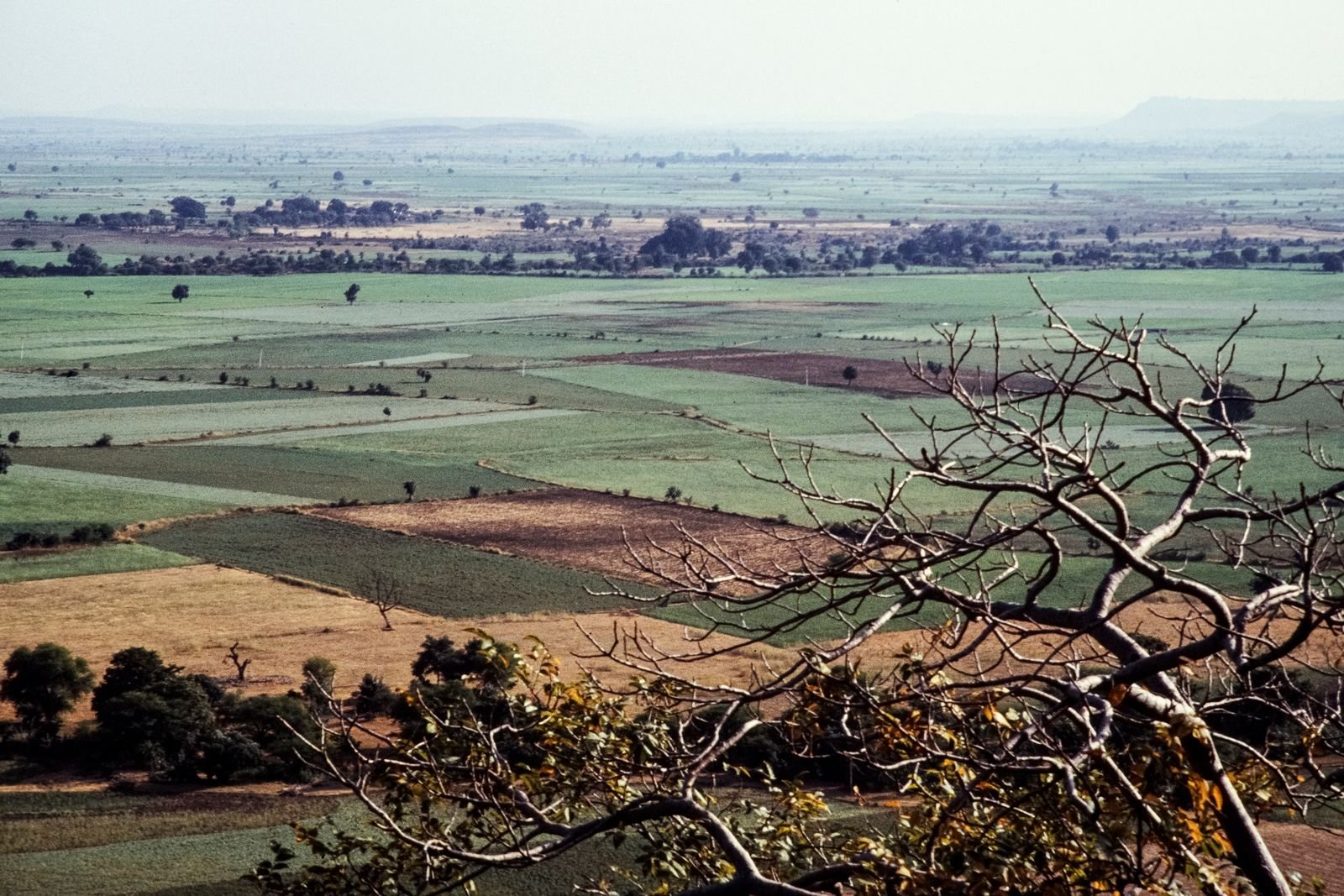
The Goa Restriction on Transfer of Agricultural Land Act 2023 came into force on 18 April 2023. It says that a person who owns or occupies agricultural land may not sell it to anyone other than an agriculturist — someone who personally cultivates land. A transfer made against that is null and void.
Two definitions do all the work here, and they are the reason this matters less than it first sounds — or a great deal more, depending on the plot. “Agricultural land” in the Act means land presently being used for cultivation of paddy, and it expressly excludes land already earmarked for a non-agricultural use in a plan prepared under the Goa Town and Country Planning Act 1974. “Agriculturist” means a person who cultivates agricultural land personally. There is also a route out: the Collector may permit a transfer to a non-agriculturist in defined circumstances, including where the buyer is capable of and intends to personally cultivate.
Put plainly: the question is never “am I Goan”. It is “what does the record say this land is”. A plot that is already Settlement zone in the Regional Plan is outside this Act entirely. A green field that somebody is growing paddy on is inside it, and no amount of enthusiasm changes that.
Source: Goa Restriction on Transfer of Agricultural Land Act, 2023
What actually decides whether you can build: the zone
Under the Goa Town and Country Planning Act 1974 and the Regional Plan, every survey number carries a zone — Settlement, Orchard, Agricultural, Natural Cover, Eco-Sensitive and others. The zone decides the permitted use and the buildable area. Ownership does not.
This is the single most useful thing to understand about Goa land, and it is where the orchard-versus-settlement question that everybody asks actually lands. Settlement zone is where houses belong. Orchard, Natural Cover and Agricultural zones are not, and a beautiful plot in the wrong zone is a beautiful plot you cannot put a house on. The order of checking, therefore, runs: what is the zone, then what is the classification in the land record, then what is the title. Most buyers do it in exactly the reverse order, which is why so many Goa purchases stall after the money has moved rather than before.
A conversion sanad, where one is needed, comes from the Collector under sections 30 and 32 of the Goa, Daman and Diu Land Revenue Code 1968. The Collector is to decide within sixty days of receipt, and a sanad is granted on payment of fees, with no fee where the area is under 200 square metres. A recent amendment is reported to have shortened that timeline — check the current position rather than planning to the number you read here.
Source: Goa, Daman and Diu Land Revenue Code, 1968
Do not buy on a promise that the zone can be changed
On 14 March 2025, the Bombay High Court at Goa struck down the rules and guidelines under which zone changes had been granted, and quashed 353 prior approvals covering roughly 26.54 lakh square metres. The State appealed; as of April 2026 that appeal was still pending.
Read that number again. Three hundred and fifty-three approvals, undone in one order. Every one of them was held by somebody who had been told, at the time of buying, that the change was a formality. Some of those people had already built.
We are not in a position to tell you how that litigation ends, and neither is anyone selling you land. What we can tell you is what we do with it: we treat a zone change as a possibility, never as a plan. If a plot is priced as though it is Settlement but is not Settlement today, the discount is not a bargain — it is the market pricing a risk that has already materialised once, publicly, for hundreds of people. Buy land that is already in the right zone, or do not buy it.
Source: Goa Foundation — on the March 2025 judgment
What to check, in order
| # | Check | What you are looking for |
|---|---|---|
| 1 | Zone certificate for the survey number | Settlement, or an honest account of what it is instead |
| 2 | Form I & XIV | Current recorded use, and any entry in someone else’s name |
| 3 | Is it under paddy cultivation? | If yes, the 2023 Act applies and the sale route changes entirely |
| 4 | CRZ classification for that survey number | A current certificate from the GCZMA — not the seller’s older one |
| 5 | Access and slope | A legal approach road, and whether earthwork permission will be needed |
| 6 | Title chain and tenancy entries | A lawyer’s job, on the actual records, including the older instruments |
Numbers one to four cost very little and can be done before you make an offer. The full document-by-document version is in buying a plot in Goa: what to check, in order, and if the land is anywhere near water, read CRZ rules in Goa before you do anything else — the no-development line runs 50 or 200 metres from the high tide line depending on the category, and it is not negotiable.
Can an NRI buy land and build in Goa?
An NRI or OCI cardholder may buy any immovable property in India except agricultural land, a farmhouse or plantation property. Goa adds no separate bar for NRIs — but because so much Goan land is agricultural or orchard, the exception bites here far more often than it does in a city.
The practical consequence is worth spelling out. In Hyderabad, an NRI looking at residential plots in a developed layout will rarely brush against the agricultural restriction. In Goa, the plot with the view is very often exactly the plot that is recorded as orchard or agricultural, and for an NRI that is not a conversion problem to solve later — the purchase itself is not permitted. The land question has to be settled before anything else, and it has to be settled by someone reading the record rather than the brochure.
If you are building here from outside India, the rest of the picture — who signs for you, which account the money comes from — is in building a house in Goa from abroad, the power of attorney and how the money should move.

Who gives building permission in Goa?
Two bodies, in sequence. First the Town and Country Planning Department issues a Technical Clearance Order after checking your drawings against the zone, the permitted area and the earthwork rules. Only then does the local body — Village Panchayat, Municipal Council, or the Corporation of the City of Panaji — issue the construction licence.
Most of coastal Goa is panchayat territory. Assagao, Siolim, Anjuna, Moira, Parra — these are villages, and your licence comes from the Village Panchayat under section 66 of the Goa Panchayat Raj Act 1994, with the Technical Clearance Order enclosed. If there is no communication within thirty days, there is an appeal route to the Deputy Director, and if that is not decided within its own thirty days the permission is deemed granted. A construction licence is valid for three years and renewable. Where the land falls in CRZ, a clearance from the Goa Coastal Zone Management Authority sits ahead of both steps.
The sequencing is what catches out-of-state buyers. It is two applications to two offices with two sets of drawings, and the second cannot start until the first is issued. Building that into the programme at the start is the difference between a monsoon you planned for and one that arrives with your foundation open. The full route is in building permission in Goa.
Source: Goa TCP — procedure to obtain permission
Where we are not the right fit
If the papers are not clean, we will not start. That sounds like a slogan until you are the one being told it — and we have told it to people who had already paid a token advance. Building on unresolved land puts a client’s money somewhere it can simply be lost, and being keen to begin is not a reason to accept that.
We also will not tell you a zone will change, a conversion will come through, or a CRZ certificate will be issued. We can tell you what the current record allows. Anyone promising you the rest is selling you the risk along with the plot.
Questions we get asked
Do I need a Goan partner or a local name to buy land here?
No. There is no restriction requiring it, and arrangements built to solve a problem that does not exist create real exposure of their own. If someone proposes one, ask them to show you the rule they are working around.
What is the difference between orchard land and settlement land?
They are zones in the Regional Plan, and they decide what may be built. Settlement is the residential zone. Orchard is not, and a house on orchard land is not simply a matter of applying. Check the zone certificate for the specific survey number before anything else.
Can I convert agricultural land after I buy it?
Conversion is a process under the Land Revenue Code with its own timeline and its own possibility of refusal — not a formality. And if you are an NRI or OCI, the purchase of agricultural land is not permitted in the first place, so conversion is not a route. Treat conversion as a risk to be resolved before purchase.
Is the 2023 paddy land rule only for outsiders?
No. It restricts the sale of paddy-cultivated agricultural land to anyone who is not an agriculturist, whether they live in Margao or Manchester. Where you are from is not one of the tests.
How far from the beach can I build?
That is decided by the CRZ category of your specific land, with no-development lines measured from the high tide line. Get a current classification certificate for your survey number from the Goa Coastal Zone Management Authority. Do not rely on a seller’s certificate or an old one.
How long does a Goa house take compared with Hyderabad?
Longer, and the monsoon is most of the reason. The approval route has two stages, and there is a stretch of the year when the sequence of work has to change. Read how long it takes to build a house in India and plan the programme around the rain rather than against it.
Where to go next
If you are looking at a specific plot, send us the survey number. We will tell you what it allows to be built — and if the answer is nothing useful, you will hear it from us before you buy, not after.
Talk to our Goa team, see our construction work in Goa and coastal villa building, or read what a slope plot really costs.