


- What is a snagging list before home handover?
- Snag three times, not once
- The room-by-room and system-by-system checklist
- Test it, do not just look at it
- The documents to collect before the final payment
- Defect liability period in India: what you actually have
- Final payment before handover: hold leverage without being unfair
- Hyderabad and Goa: what actually fails here
- When we are not the right fit
Snagging is not a walk through the house with a notepad. It is the last hour in which the person who built your home still has a commercial reason to come back.
A snagging list before home handover works only if it is written while money is still unpaid and access is still yours. Once the final cheque clears and the keys change hands, every defect becomes a favour you are asking for. That single fact should shape how you plan the day, and it is the part most possession advice skips.
This is a practical guide for a house built on your own plot in Hyderabad or Goa. It covers what to check, what to test, what documents to collect, and what you actually have after handover. It is general information, not legal advice — have a lawyer read your specific contract.
What is a snagging list before home handover?
A snag list is a written, numbered record of every defect and incomplete item found before you accept the house. Each entry names the room, the defect and the fix, and is signed by both sides. It is attached to the handover document, not sent as a friendly message.
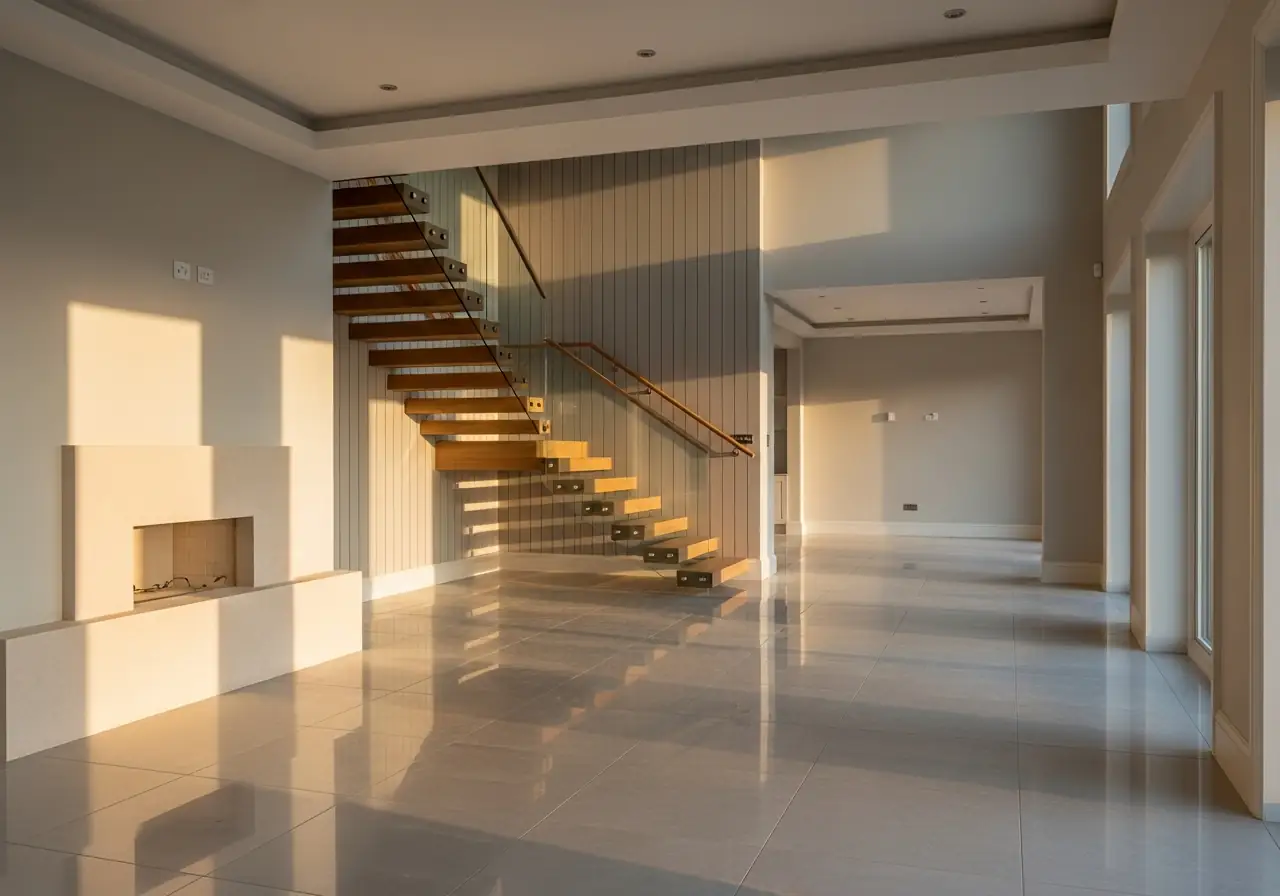
The word snag makes it sound small. In practice the list decides who pays for the repairs that follow. A defect written down before handover, in a document the contractor signed, is an obligation. The same defect noticed a month later is a conversation. So the format matters more than the length. Number every item so nothing can be quietly dropped. Photograph each one with the date visible on the file, not on the image. Say what the acceptable fix is, because “hollow tile in the guest bathroom” and “replace the hollow tile in the guest bathroom” are read very differently later. Then set a date by which the list must be cleared, and state which part of the money is released only when it is. A house handover checklist in India that fails does so almost always for the same reason — everything was noted and nothing was linked to payment.
Snag three times, not once
One inspection at the end catches only what is visible. By then the expensive faults are behind plaster and under tiles. Snag at three points instead: before anything is concealed, when finishes go on, and at handover. The first pass saves the most money.
This is the genuine gap in almost every possession guide, because they are written for flats bought from a developer where the buyer never sees the build. On your own plot you can be there. Use it. Before plumbing and conduits disappear into walls, that work can be seen, tested and photographed at a cost of nothing. After plastering, the same check needs a chisel. IS 2065:1983 is unusually blunt about this and states in clause 8.1.11 that piping shall not be buried in walls or solid floors, and that where it is unavoidable it may be buried for short distances only, with adequate protection and no buried joints. Most Indian homes are built the other way round. If yours is, at least insist the line is pressure-tested and photographed before it is covered. The same logic applies to steel before a pour, waterproofing before screed, and earthing before backfill.
| Pass | When it happens | What you are actually checking | What it costs to miss |
|---|---|---|---|
| Pre-concealment | Before plaster, screed and backfill | Steel and cover before pouring, conduit and pipe routes, pressure tests, waterproofing at bathrooms, terraces and sunken slabs, earthing pits | Breaking finished work to reach the fault, and no way to prove what was there |
| Finishes | As tiling, joinery and painting proceed | Level and slope in wet areas, hollow tiles, door and window operation, shutter alignment, plaster cracks at junctions | Whole-room redoing instead of a single corrected batch |
| Handover | Before the final payment and before you move in | Everything that switches, drains, opens, closes or leaks, plus the document file and test records | Defects become requests, and the file may never arrive |
Waterproofing deserves its own pass, because it is the one failure that shows up late and costs the most to correct. Our note on waterproofing a house in Hyderabad sets out the stages where it has to be done rather than the products people argue about.
The room-by-room and system-by-system checklist
Walk the house in a fixed order and test rather than look. Carry a torch, a spirit level, a mobile charger, a bucket, a marble and a plumb line. Use the table below as your working sheet, and write the room number against every entry.
This is what to check before taking possession, in the order that works on site. Start at the terrace and work down, because water travels downwards and a terrace fault explains bedroom stains. Do the wet areas with a bucket, not with your eyes. Run every tap and flush every closet at the same time so you see how the system behaves under load. Take the marble to check floor slope in bathrooms and balconies, and take the charger to test every socket rather than sampling a few.
| Area or system | What to check | How to test it | Common defect |
|---|---|---|---|
| Terrace and parapet | Slope, drain outlets, coving at the parapet junction | Flood the terrace and watch where water stands after an hour | Ponding away from the outlet; coving missed at the junction |
| External walls | Cracks at slab and masonry junctions, sill and window heads | Look from ground level at low sun, and again after rain | Hairline cracks along beam and block joints |
| Bathrooms | Slope to drain, hollow tiles, sunken slab dryness, tap flow | Bucket of water on the floor, and tap every tile | Water standing at the far corner; hollow tiles near the door |
| Kitchen | Counter level, sink drainage, chimney duct path, socket count | Spirit level on the counter, fill and drain the sink twice | Slow drainage; sockets that do not reach the appliances |
| Bedrooms | Floor level, skirting gaps, wardrobe shutter alignment | Marble on the floor, and open every shutter fully | Shutters that catch, gaps at the skirting line |
| Doors and windows | Operation, locking, gaps, weather seal, mesh fit | Open and close each one, lock it, then check the gap all round | Doors that need force; window drainage holes blocked |
| Plaster and paint | Flatness, sharp edges, coverage at corners and behind pipes | Straight edge across the wall, torch held flat to the surface | Wavy surfaces visible only under raking light |
| Flooring | Hollowness, level across joints, grout, skirting line | Tap every tile with a coin and listen for the change | Hollow tiles in traffic lines; lippage at joints |
| Plumbing | Pressure, leaks at joints, drain speed, overhead tank overflow | Run all outlets together and watch every visible joint | Weeping joints under counters; slow floor traps |
| Electrical | Every point live, correct polarity, MCB labelling, earthing | Charger in every socket, switch every point, read the DB chart | Dead points behind furniture; an unlabelled distribution board |
| Drainage and external | Chamber covers, gradient away from the plinth, rainwater path | Pour water at each chamber and watch it clear | Ground sloping back towards the wall |
| Staircase and railing | Riser consistency, nosing, railing fixing | Measure risers, then pull hard on the railing | One odd riser at the landing; loose railing base plate |
Test it, do not just look at it
Looks tell you about the last coat of paint. Tests tell you about the house. Three checks matter most: the concrete records, the insulation resistance of the wiring, and a held pressure test on the water lines. All three have published Indian numbers you can quote.
Start with concrete, because it is the only part nobody can inspect afterwards. IS 456:2000 requires concrete to be kept constantly wet for at least seven days from the date of placing with ordinary Portland cement, and at least ten days where mineral admixtures or blended cements are used, with fourteen days recommended. It also fixes sampling — IS 456:2000 sets one sample for one to five cubic metres of concrete, two for six to fifteen, three for sixteen to thirty, and four for thirty-one to fifty. Ask for the cube test reports by pour. On wiring, the CEA (Measures relating to Safety and Electric Supply) Regulations 2010 state in Regulation 33 that on application of 500 volts direct current between each live conductor and earth for one minute, insulation resistance for installations not exceeding 650 volts shall be at least 5 megohm. Regulation 29 of the same rules requires the work to be done by a licensed electrical contractor under the direct supervision of a person holding a certificate of competency.
Water lines are the third. IS 2065:1983 provides in clause 14.2 that the test pressure shall be the greater of the stated value or the maximum working pressure plus fifty percent, and that the test pressure shall maintain itself without measurable loss for at least half an hour. Half an hour is the whole point — a line that holds for two minutes tells you nothing.
Finishes have standards too, and quoting them ends arguments quickly. IS 1661:1972 states in clause 16.1 that each plaster coat shall be kept damp continuously until the next coat is applied or for a maximum of seven days, and requires in clause 13.1.2 that joints in new masonry are raked out to a depth of at least 10 mm before plastering. On the masonry itself, IS 2212:1991 limits any bed joint to 12 mm thickness, requires brickwork to be kept constantly wet for at least seven days in hot dry weather, and says no part of a wall shall rise more than one metre above the general construction level in a day. If your walls went up faster than that, ask why. What goes into the wall is as decisive as how it is laid, which is covered in our note on materials for house construction.
The documents to collect before the final payment
Collect the file before the money moves, because a document you have not received by handover day is a document you may spend a year chasing. Ask for approvals, as-built drawings, test reports, warranty cards, and the completion or occupancy paperwork your local authority issues.
Rules differ by state, which is why a single national checklist misleads people. In Telangana, applications now run through BuildNow, the state portal that replaced TG-bPASS when that system closed permanently after 15 December 2025. BuildNow states that an occupancy certificate for an individual residential building on a plot up to two hundred square metres with a height up to seven metres is exempted, and that permission runs on self-certification through three instant routes set by plot size and number of floors. So on a smaller Hyderabad plot there may be no occupancy certificate to collect at all, and the sanctioned plan and self-certification records become your record instead. In Goa, the Margao Municipal Council lists a completion certificate from the architect or engineer in the prescribed format and a structural stability certificate from a structural engineer with RCC calculations among the documents an occupancy certificate application must carry.
Add the practical ones to the same file: cube test reports, waterproofing warranty, appliance and fitting warranty cards, the electrical distribution board chart, plumbing and conduit as-built routes, paint shade codes, and spare tiles from the same batch. That last item sounds trivial until a tile cracks and the batch no longer exists.
Snag three times, not once — the pass that saves the most money happens before anything is concealed.
Defect liability period in India: what you actually have
On a house you commissioned on your own land, the defect liability period comes only from your contract. The Real Estate (Regulation and Development) Act 2016 gives a five-year route, but it runs against a promoter who sold you a property, not against a contractor who built for you.
The five-year figure circulates so widely that owners assume it covers them automatically. Section 14(3) of the Real Estate (Regulation and Development) Act 2016 requires that where a structural defect, or a defect in workmanship, quality or provision of services, is brought to the promoter’s notice within five years from the date of handing over possession, the promoter must rectify it without further charge within thirty days. But Section 2(zk) of that Act defines a promoter as a person who constructs or causes to be constructed a building for the purpose of selling it, and Section 2(d) defines an allottee as the person to whom it was sold or transferred. Your contractor sold you a service. So check your agreement instead, and if the period is not written there, that is the conversation to have before handover rather than after it.
Where the contract does set a period, make it operational. Write a response time in days, name who the notice goes to, and hold retention until the period ends. A defect liability clause with no money behind it depends entirely on goodwill after the relationship is over.
Final payment before handover: hold leverage without being unfair
Release the final payment against a cleared snag list and a delivered document file, not against a date. Keep a retention amount running through the defect liability period. This is normal commercial practice, not distrust, and it should have been agreed at signing.
Owners often swing between two mistakes. Some pay everything on the day the house looks finished, then discover the last stretch of work has no funding behind it. Others hold money back with no stated reason, which turns a working relationship adversarial and rarely produces faster repairs. The middle path is written and boring: an agreed sum released when the numbered snag list is signed off, and a smaller retention released at the end of the defect liability period. It also helps to know what a delay clause is really worth. Section 74 of the Indian Contract Act 1872 entitles the complaining party to reasonable compensation not exceeding the amount named in the contract, which makes a named penalty a ceiling rather than a cheque. Money you still hold is worth far more than money you would have to claim.
Hyderabad and Goa: what actually fails here
Local climate decides which defects appear first. In Hyderabad it is curing and thermal movement. In Goa it is water, salt and humidity. Same checklist, different order of priority, and different things worth arguing about on handover day.
Hyderabad summers work against concrete and plaster. Water evaporates from a slab faster than it can hydrate, which is exactly why IS 456:2000 fixes seven days as the minimum wet-curing period, and why shrinkage cracks at slab and masonry junctions are the most common complaint on handover in Jubilee Hills, Kokapet and Gachibowli builds alike. Check junction lines under raking light. Goa is the opposite problem — sustained humidity, driving monsoon rain on one face of the house, and salt-laden air near the coast. There, window and door drainage details, terrace coving, the external wall facing the monsoon, and hardware corrosion deserve more attention than anything else on the list. If you are following the build rather than arriving at the end, our page on the stages of house construction shows where each of these checks belongs.
When we are not the right fit
We build under one contract with our own site team, so we snag against our own work throughout rather than only at the end. If you have already built with someone else and want an independent inspector for one day, we are not that service, and a specialist inspection firm will serve you better.
We are also the wrong choice if the deciding factor is the lowest quoted figure. Testing, curing time and documentation all cost money, and a build run this way is not the quickest to finish. Owners who care about what is under the plaster tend to find the trade worthwhile. You can see the outcome on our projects page — Kingston Park and Ridhira Zen are complete and can be visited, and Golecha Ghar is currently under construction if you would rather walk a live site than a finished one.
What should be on a snagging list before home handover?
Every defect and incomplete item, numbered, with the room named, a photograph, the agreed fix and a date for completion. Keep systems separate from finishes so nothing hides in a long paragraph. Attach the list to the handover document and link part of the payment to clearing it.
Can I refuse to take possession until the snags are fixed?
What you can do depends on your contract, which is why the handover and payment clauses matter more than anything you say on the day. In practice most owners accept the house with a signed snag list attached and a stated sum withheld until it is cleared, which keeps possession and leverage at the same time.
What if the builder demands the final payment before fixing defects?
Go back to what was agreed. If your contract ties the final release to a cleared snag list, that is the answer. If it does not, offer a written schedule — a part payment now, the balance on sign-off — and put it in an email. Section 74 of the Indian Contract Act 1872 allows only reasonable compensation not exceeding the amount named in a contract, so money already held is worth more than money claimed later.
What is the defect liability period in India for an independent house?
Only what your contract says. The five-year period under Section 14(3) of the Real Estate (Regulation and Development) Act 2016 runs against a promoter, and Section 2(zk) of that Act defines a promoter as someone building in order to sell. A contractor building on your own plot is outside that definition. Other remedies may exist on the facts — the Consumer Protection Act 2019 names housing construction in its definition of service — but the agreement is what you can plan around.
Do I need an occupancy certificate for a house in Hyderabad?
Not always. BuildNow, the Telangana portal that replaced TG-bPASS, states that an occupancy certificate for an individual residential building on a plot up to two hundred square metres with a height up to seven metres is exempted. Above that, it is part of the process, so confirm which category your plot falls into before handover day.
What documents should I get at handover?
Approvals and the sanctioned plan, as-built drawings, concrete cube test reports, warranty cards, the distribution board chart, paint codes, spare tiles and the completion paperwork your authority issues. In Goa, the Margao Municipal Council requires a structural stability certificate from a structural engineer with RCC calculations for occupancy, so that belongs in the file too.
Defects appeared months after we moved in — what now?
Write to the contractor immediately with photographs and dates, referring to the defect liability clause in your agreement. Do not begin repairs yourself before giving written notice, because that weakens any later claim. Keep everything in writing rather than on calls, and keep the original snag list, since a recurring defect that was on it reads very differently from a new one.
How long should snagging take on a full house?
Plan a full day for the handover pass on an independent house, and do it in daylight with the water supply and power on. Rushing it in an hour with the family present is how sockets, floor slopes and door operation go unchecked. Split the day if you can: systems in the morning, finishes in the afternoon.
If you would rather have the testing, the records and the snag list built into the way the house is delivered, that is how we work as a construction company in Hyderabad and on turnkey home construction. Bring us your plot or your drawings — talk to our team.
Sources
- IS 456:2000, Plain and Reinforced Concrete Code of Practice, Bureau of Indian Standards — curing clause 13.5.1 and sampling clause 15.2.2.
- IS 2065:1983, Code of Practice for Water Supply in Buildings — pressure testing clause 14.2 and buried piping clause 8.1.11.
- IS 1661:1972, Code of Practice for Cement and Cement-Lime Plaster Finishes — curing clause 16.1 and joint raking clause 13.1.2.
- IS 2212:1991, Code of Practice for Brickworks — bed joint clause 6.4.1, wall lift clause 11.1.4 and curing clause 11.10.
- CEA (Measures relating to Safety and Electric Supply) Regulations 2010 — insulation resistance Regulation 33 and licensed contractor Regulation 29.
- Real Estate (Regulation and Development) Act 2016, hosted by Haryana RERA — Sections 2(d), 2(zk) and 14(3).
- Indian Contract Act 1872, full text on India Code — Section 74.
- BuildNow official frequently asked questions, Government of Telangana — occupancy certificate exemption, self-certification and permission timeline.
- Occupancy certificate requirements, Margao Municipal Council, Goa — completion and structural stability certificates.
Ask us for our handover document set. It is the same one every client gets.