

A crack in your wall is your home trying to tell you something. Most of the time it is saying “nothing serious, just plaster settling.” Sometimes it is saying “look deeper, something underneath moved.” The trouble is that a hairline that means nothing and a crack that means everything can look almost identical from across the room — so the real skill is knowing which is which before you either panic or paint over a warning.
This is a builder’s honest guide to cracks in walls — why they happen, how to read them, which ones are cosmetic and which ones you should never ignore, and how good construction stops most of them from ever appearing. Plain words, real detail, so you can look at your own wall and know whether to relax or ring someone who knows.
- The short answer
- Why walls crack
- Types of cracks and what they mean
- Cosmetic or serious: when to worry
- The cracks you should never ignore
- How good construction prevents cracks
- The permanent fix, not the cover-up
- Checking a home for cracks before you buy
- Wall cracks in Hyderabad homes
- Common questions
The short answer
That single rule sorts most worries. The rest of this guide shows you how to read the difference with confidence, and why the best cure is a home built so the serious cracks never start.
Why walls crack
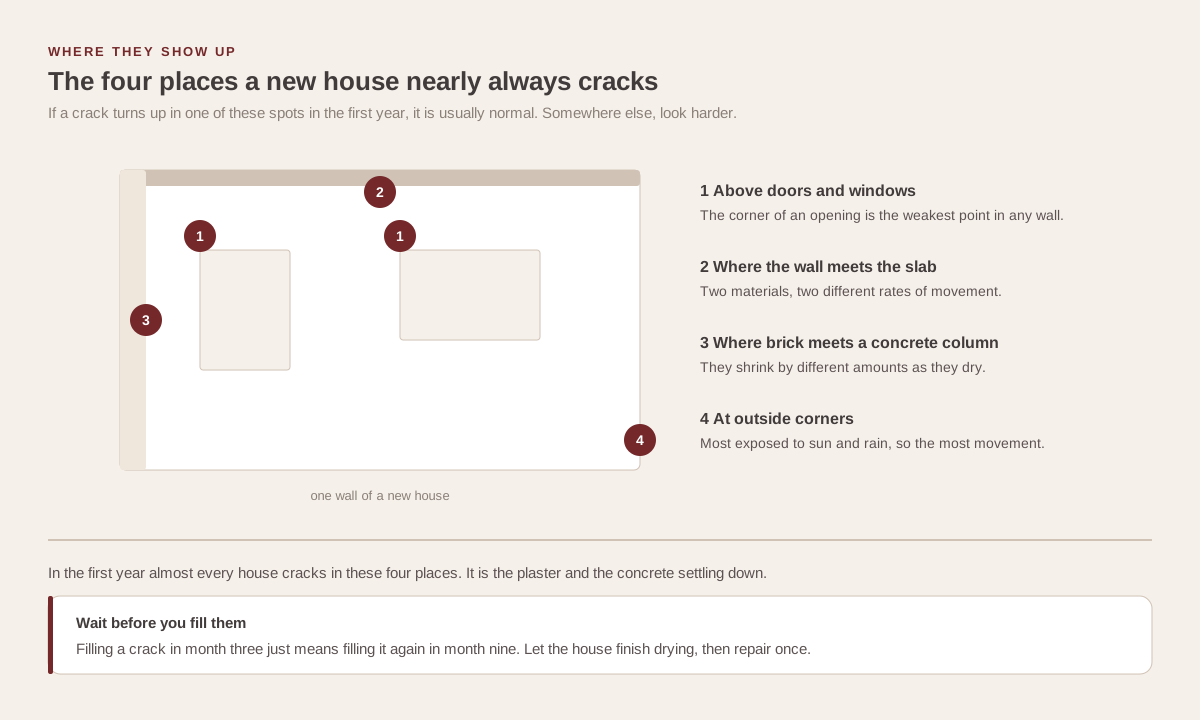
Walls crack because buildings move. Concrete and plaster shrink a little as they dry, materials expand and contract with heat, the ground settles, and loads shift over time. A small amount of this is normal in every home ever built. The question is never “is there movement” — it is “how much, and is it safe.”
The common causes fall into a few families: shrinkage as fresh plaster or concrete cures; thermal movement as walls heat and cool; settlement as the ground under the foundation adjusts; poor workmanship such as rushed curing or a weak plaster mix; and structural stress where a beam, slab or foundation is genuinely overloaded or has moved. The first two are almost always harmless. The last one is the one that matters — and reading the crack is how you tell them apart.
Types of cracks and what they mean
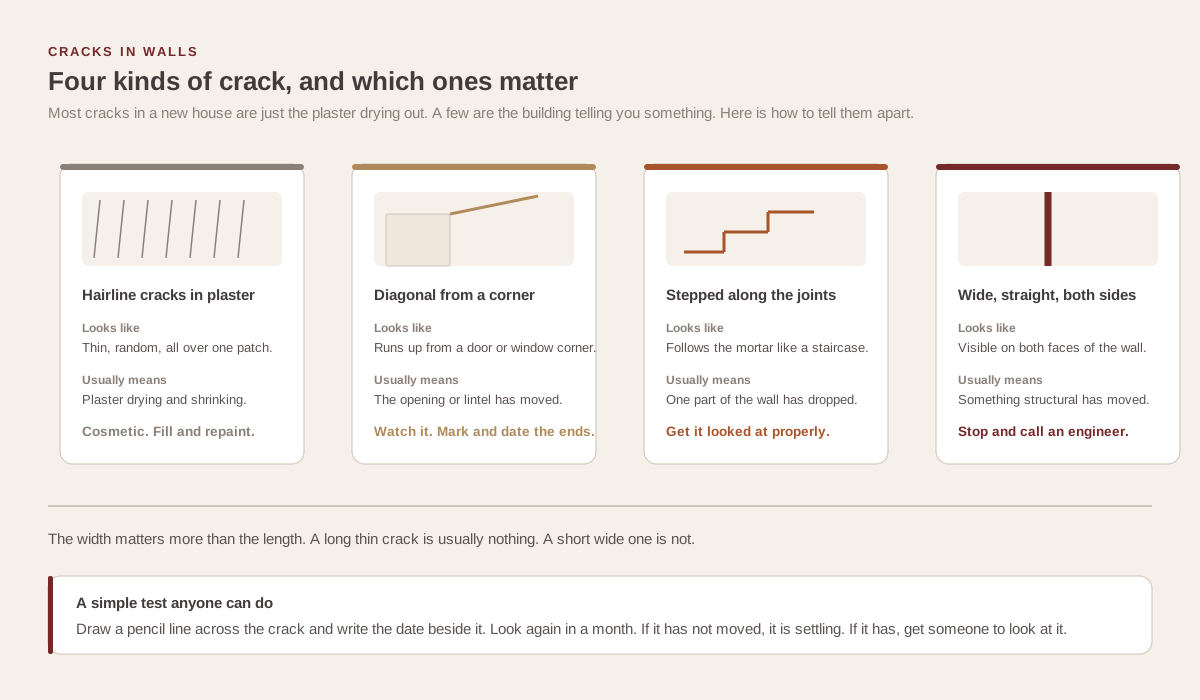
The shape, direction and width of a crack tell you most of what you need to know. Here is how to read the common ones.
| Crack type | What it usually means | How concerned to be |
|---|---|---|
| Fine hairline, map-like | Plaster shrinkage or paint film — surface only | Low — almost always cosmetic |
| Thin vertical | Minor shrinkage or settling, common in new homes | Low — watch it, rarely serious |
| Diagonal from a corner (of a door or window) | Stress concentration or some settlement | Medium — watch closely, get it checked if it grows |
| Horizontal on a load-bearing wall | Possible structural stress or foundation movement | High — have it assessed |
| Stair-step through brick joints | Differential settlement of the foundation | High — have it assessed |
| Wide, growing, or with a step in the surface | Active movement | High — do not ignore |
A useful test: run a coin along the crack. If it is barely a surface line, it is very likely cosmetic. If it has depth, a width you can feel, or one side sits proud of the other, it is worth a professional eye. And any crack that is visibly wider this month than last is telling you it is still moving — that alone is reason to look closer.
Cosmetic or serious: when to worry
Most homeowners fall into one of two traps: panicking over a harmless hairline, or painting over something that needed attention. The honest middle path is to judge by a few clear signals rather than by how alarming the crack looks.
A crack is very likely cosmetic if it is thin, shallow, stable over months, and not paired with any other symptom. It is more likely serious if it is wide, diagonal or horizontal on a structural wall, actively growing, or — the biggest tell — accompanied by doors and windows that have started to stick, floors that feel uneven, or gaps opening where the wall meets the ceiling or floor. One crack alone rarely means trouble. A crack plus those companions is the pattern that deserves a proper structural look.
The cracks you should never ignore
Some signs are worth acting on quickly, not because they always mean disaster, but because if there is a real problem, early is cheap and late is not.
- Horizontal cracks on a load-bearing wall. These can signal real structural stress and are the least cosmetic of all.
- Stair-step cracks through brickwork, especially near the base of the house — a classic sign of uneven foundation settlement.
- Any crack that is visibly widening week to week. Active movement is the signal that matters most.
- Cracks with sticking doors, sloping floors, or ceiling-to-wall gaps. The combination points below the surface.
- Cracks that leak or stay damp. Water tracking through a crack is both a clue and a second problem in the making.
None of these are a reason to panic — many turn out manageable. They are a reason to have someone who understands structure look before you decide anything. Reading a crack correctly is worth far more than any filler.
How good construction prevents cracks
Here is the part the crack-repair articles skip, because it does not sell filler: most serious cracks are not fixed after the fact — they are prevented during the build. The homes that stay crack-free years later were built with the invisible discipline that stops movement before it starts.
- A soil test before the foundation. The foundation is designed for the actual ground, not copied from the next plot — this is what prevents the settlement cracks that matter most.
- Full curing. Concrete and plaster kept wet the full time so they shrink slowly and evenly, not fast and cracked.
- The right plaster mix and thickness. Over-strong or over-thick plaster cracks; a correct mix, applied in the right coats, does not.
- Control joints and lintels. Planned places for the building to move, and proper support over openings, so stress does not tear the wall instead.
- Good materials, correctly used. The right cement, steel and blocks handled with care, so the structure behaves as designed.
Every one of these is a decision made before anyone could see a crack. That is the whole point: quality you cannot see later is what keeps the walls clean. A home built in a hurry saves days and hands you cracks for years.
The permanent fix, not the cover-up
The temptation with any crack is to fill it, paint it, and move on. For a genuine hairline, that is fine — a flexible filler and a coat of paint is a real fix. But for anything caused by movement or water, filling the crack without solving the cause is just hiding the warning. It will come back, often wider, and you will have lost the months where it was easy to understand.
A proper repair follows the cause. If it is settlement, the foundation issue is addressed first. If it is water — a very common driver in Indian homes — the waterproofing is corrected before the wall is made good, or the crack simply returns with the next monsoon. If it is structural, an engineer decides the fix. Only once the cause is handled does the visible repair make sense. Anyone who offers to “just fill it” without asking why it cracked is selling you time, not a solution.
Worried about cracks, or want a home built so they never start?
We design and build under one accountable team — soil tests, full curing and honest workmanship built in from day one.
Checking a home for cracks before you buy
If you are inspecting a home to buy or take over, cracks are one of the most honest things a building will tell you — if you know where to look. A quick, calm walk-through beats any coat of fresh paint hiding the story.
- Look at corners of doors and windows — where stress cracks show first.
- Check where walls meet ceilings and floors for gaps that suggest movement.
- Open and close every door, feeling for any that stick or scrape — a sign of shifting frames.
- Watch for very fresh paint in patches, which can mean a recent crack was covered just before viewing.
- Look outside too, at the plinth and external walls, for stair-step cracks near the base.
None of this needs an expert to spot. If you find the serious patterns, that is the moment to bring one in — before you sign, not after.
Wall cracks in Hyderabad homes
Cracks are universal, but their causes are local. In and around Hyderabad, two things drive more wall cracks than anything else. First, the soil changes street to street — rocky in parts, expansive black-cotton clay in others that swells in the monsoon and shrinks in summer, moving the ground under the foundation. A home built without a real soil test on that kind of ground is the classic source of settlement cracks. Second, the sheer heat swing between a 40-degree afternoon and a cooler night works walls hard, so thermal cracks are common where plaster and joints were rushed.
Both are preventable with the right groundwork — an actual soil test, a foundation designed for it, full curing through the heat, and waterproofing that keeps the monsoon out of the walls. When a home is built this way as part of a proper house construction in Hyderabad, most of the cracks that plague rushed builds never get the chance to start. It is far cheaper to prevent them in the ground than to chase them across the walls for twenty years.
Almost every failure above is prevented at a stage you can point to — the soil test, the curing, the waterproofing. You can see where each one sits in how we sequence a build, and the homes built that way in our projects.
Seeing cracks already, or building and want to avoid them?
Send a photo with something in it for scale, and tell us how old the house is. We will tell you whether it looks routine or worth a structural inspection. A photograph cannot confirm that a wall is safe and we will not pretend otherwise — what it can do is tell you whether to call an engineer rather than a painter.
Common questions
Are cracks in walls normal?
Small ones, yes. Thin, shallow shrinkage and settling cracks appear in almost every home as materials dry and the building settles, and they are usually cosmetic. What is not normal is a wide, diagonal or horizontal crack on a structural wall, or any crack that keeps growing — those point to movement and deserve a proper look.
When should I worry about a crack in my wall?
Worry when a crack is wide, diagonal from a door or window corner, horizontal on a load-bearing wall, or actively growing — especially if doors have started sticking, floors feel uneven, or gaps are opening at the ceiling. One crack alone is rarely trouble; a crack with those companions is the pattern to have assessed.
What does a structural crack look like?
Structural cracks tend to be wider, run diagonally from openings or horizontally across load-bearing walls, or step through brick joints near the base of the house. They are often paired with sticking doors or sloping floors, and they grow over time. If a crack shows depth, width you can feel, or one side sitting proud, treat it as one to check.
Can wall cracks be permanently repaired?
Yes, but only if the cause is fixed first. A true hairline needs just flexible filler and paint. A crack caused by settlement, water or structural stress will return if you only fill it — the foundation, waterproofing or structural issue has to be addressed before the visible repair. Anyone offering to just fill it without asking why it cracked is hiding the problem, not solving it.
Why do new houses develop cracks so soon?
Usually because the build was rushed. Curing cut short, an over-strong or over-thick plaster mix, or skipping a soil test all cause cracks that show within a year or two. These are workmanship cracks, not bad luck, and they are exactly what careful construction — full curing, the right mix, a proper foundation — prevents.
Do wall cracks mean water is getting in?
Sometimes, and it works both ways. Water tracking through a crack keeps it damp and makes it worse, and in many Indian homes poor waterproofing is the original cause of the crack. If a crack stays damp or leaks, treat the water problem as part of the repair — filling a wet crack without stopping the water simply invites it back with the next monsoon.
Written by the Simfy Homes team. We design and build homes in Hyderabad and Goa under one accountable team. See our waterproofing guide and house construction in Hyderabad pages for how we work.