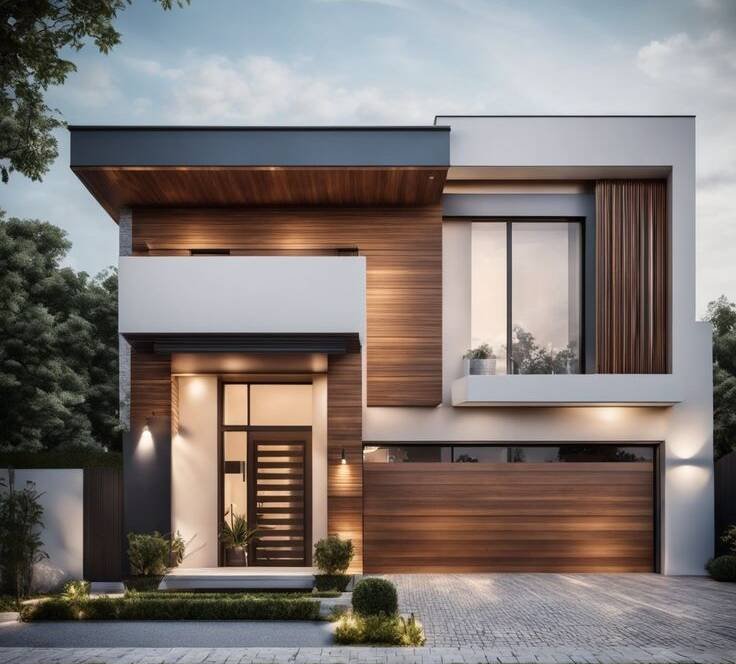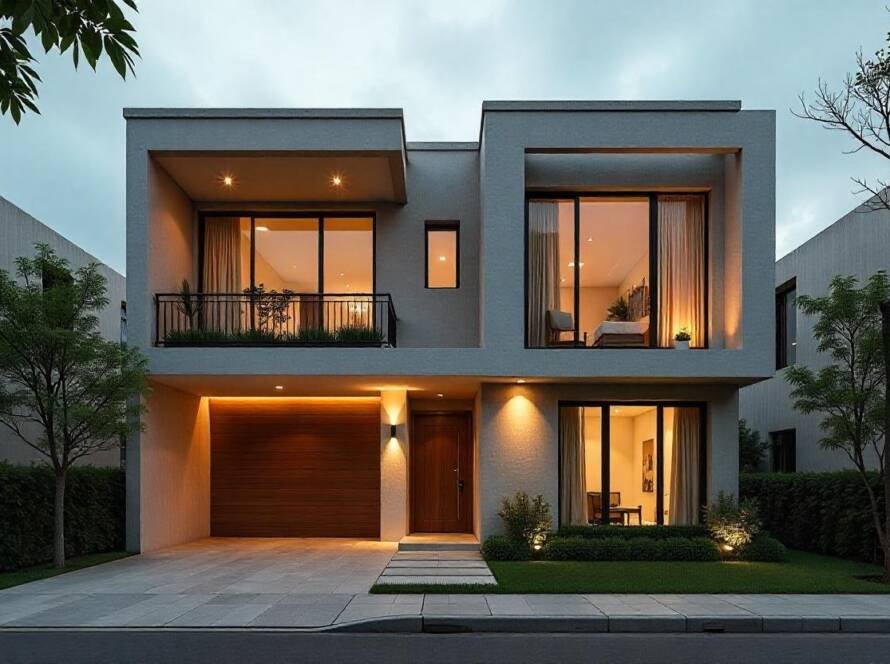


The view is the reason you bought it. The slope is the reason it costs what it costs.
Hill plots in Goa sell on the photograph taken from the top. What the photograph does not show is that the ground under your feet is the single largest variable in the budget, the timeline and the risk — and that in Goa it is also the most scrutinised.
Hill cutting has become one of the state’s live political and regulatory issues. The Town & Country Planning Board has moved to sharply increase penalties for illegal hill cutting, with Goan media reporting fines running into crores. Whatever the final figure, the direction is unmistakable: a slope plot is not a place to improvise.
Can you build on a hill slope plot in Goa?
Often yes — but what is permitted depends on the gradient, the zone your plot falls in, and how much of the natural slope your design proposes to alter. The answer comes from the planning authority for your specific survey number, not from what a neighbour was allowed to do five years ago.
That last point matters more than any rule of thumb. Goa’s treatment of slopes has tightened, and precedent from the surrounding plots is now one of the least reliable guides available. A structure built before the current scrutiny is not evidence that the same thing is permissible today, and in some cases the existence of past cutting on a plot is itself a complication for the next owner rather than a precedent in their favour. The only safe sequence is to establish what the slope permits before commissioning a design, because on a hill plot the design and the earthwork are the same decision.

What a slope actually adds to the cost
Owners expect the excavation to cost more. That is the smallest item on this list.
| What changes | Why it costs |
|---|---|
| Retaining structures | Holding cut ground is engineering, designed to the soil report. Usually the largest slope premium |
| Foundations at varying depth | Different levels meet different strata. One foundation design rarely serves the whole footprint |
| Drainage and water routing | Water moves downhill through your site for four months a year. It must be given a designed path |
| Site access | Getting concrete, steel and machinery up costs money every single day of the build |
| Services routing | Water, power and sewage across levels need pumping, tanks and longer runs |
| Monsoon exposure | Open cut ground and heavy rain do not mix. Sequencing is tighter and less forgiving |
Read that list next to any per-square-metre figure you have been quoted. A slope quote built on flat-site rates is not a quote; it is an opening position.
The geotechnical report is not optional here
On a flat plot, skipping the soil test is a bad idea. On a slope, it is the whole project.
A slope investigation answers questions that a flat-site test does not have to: how deep the weathered material runs, where rock begins, how water moves through the ground, and whether the cut face will stand on its own or needs to be held. The retaining design, the foundation design and the drainage design all come out of that one report.
The failure mode is specific and worth naming. It rarely shows up during construction. It shows up in the second or third monsoon, as movement behind a retaining wall that was sized by assumption rather than by measurement — and by then it is under the house.
The questions to ask before you buy
- What is the gradient, measured, across the buildable area — not estimated by eye
- What does the planning authority permit on this survey number given that gradient and zone
- Has the plot already been cut — and if so, when, and with what permission
- Where does water currently run, and where would it run after your build
- How will a concrete truck reach the pour, on an ordinary working day
- What does the geotechnical report say — commissioned before purchase where the seller allows it
Question 3 is the one buyers skip, and the one that most often turns into someone else’s problem becoming yours.
Design with the slope, not against it
The cheapest slope house is usually the one that moves the least earth. Stepping a building down the contour, splitting levels, and putting the parking at road level rather than carving a flat pad all reduce the retaining work — which is where the money is.
It also tends to produce a better house. A stepped home on a hill gets light and view on more sides, and sits in the landscape instead of on a shelf cut into it. The version that fights the slope is both the more expensive one and the more conspicuous one, in a state that is now looking closely at exactly that.
When we will tell you to walk away
If a plot’s permitted envelope is so constrained that the house you want cannot sit on it without heavy cutting, we will say that plainly — before fees, not after. Some slope plots are wonderful. Some are a photograph with a problem attached.
We would rather lose the project than build something that becomes an enforcement question later, or a drainage question in year three.
Questions we get asked
Is hill cutting banned in Goa?
Cutting is regulated rather than uniformly prohibited, and the regulation has been tightening — the TCP Board has moved to raise penalties substantially for illegal cutting. What is permitted on your plot must be confirmed with the planning authority for that survey number. Do not rely on a general answer, including this one.
The previous owner already cut the hill. Is that my problem?
It can be. Past work without permission does not become lawful because the land changed hands. Establish the history before purchase, in writing.
How much more does a slope plot cost to build on?
There is no honest single figure, because it is driven by retaining volume and access — both of which vary enormously between plots that look similar. Anyone giving you a percentage without a soil report and a measured gradient is guessing.
Can I build in the monsoon on a slope?
Earthwork and open cut faces in heavy rain are where slope sites get into trouble. See our guide to monsoon construction in Goa for how the year should be sequenced.
Does CRZ apply as well?
It can, and the two are separate. A coastal hill plot may face both slope and CRZ constraints. See CRZ rules in Goa.
Where to go next
Before you commit to a hill plot, send us the survey number. We will tell you what the gradient and zone allow, what the retaining work is likely to involve, and whether the house you want fits — including when it does not.
Talk to our Goa team, read about the Goa permission route, or see our villa building work in Goa and how we build here.
Penalty and enforcement details reported by Goan media; regulations change. Confirm the current position with the Town & Country Planning Department for your plot. Reference: TCP Board approves steep penalties for hill cutting.